
Fertility herbs
Nourishment, cycle awareness and thoughtful plant care before pregnancy.
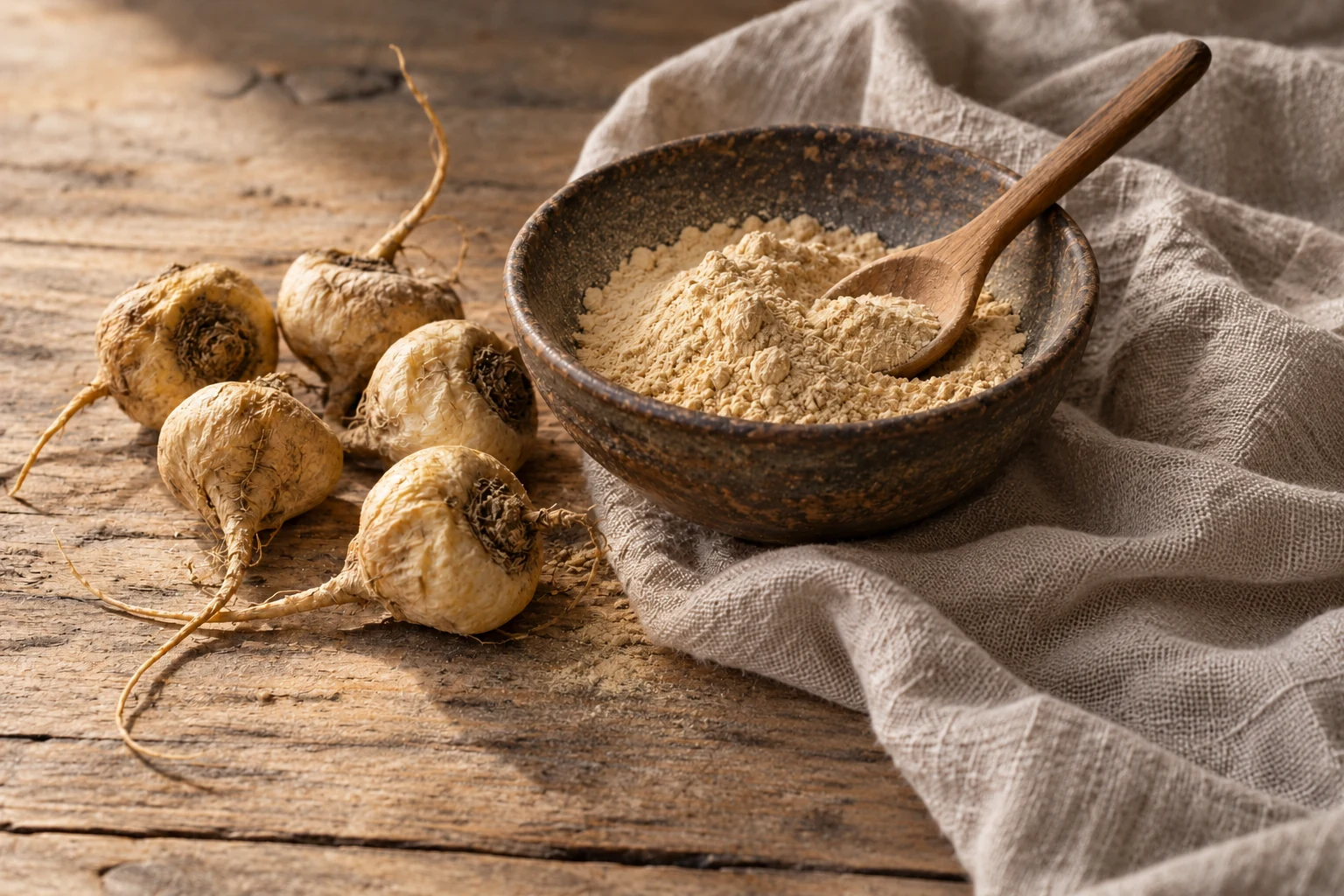
Preparing for pregnancy can begin with the ordinary: regular meals, attention to your cycle, and care that makes room for your history. Herbs used for menstrual symptoms are often called “fertility herbs”, but that name does not tell us whether they improve the chance of pregnancy.
Use this chart to separate nourishing foods from medicinal preparations. Cycle changes, pelvic pain and difficulty conceiving deserve their own assessment.
Nutrition, taste & common uses
| Plant | Taste & form | Nutrition | Common context |
|---|---|---|---|
| Vitex · chaste tree | Bitter, peppery berries; usually a specified extract. | Not a nutritional supplement. | PMS and selected menstrual-cycle complaints; sometimes discussed during preconception care. Use only with individual guidance when trying to conceive. Avoid in pregnancy; review fertility medicines and hormonal treatments. |
| Maca | Malty and earthy; traditionally a cooked root or food powder. | Food energy; small supplemental servings contribute little overall nutrition. | An Andean food with vitality and reproductive-health traditions. A traditional association is not a fertility treatment. Pregnancy use of supplements needs review. |
| Oats | Mild and creamy; cooked grain. | Carbohydrate, fiber and some protein. | A practical base for meals when appetite, energy or routines feel uneven. Oat grain as food differs from milky-oat tinctures or green-oat extracts. |
| Flaxseed | Nutty; ground seed in porridge or meals. | Fiber and plant omega-3 fat. | Variety and bowel regularity in a preconception diet. Review concentrated products and medicines; do not assume a preconception supplement remains suitable in pregnancy. |
A short history
Fertility traditions bring together foods, cycle knowledge and culturally specific plant practices. Maca comes from Andean food traditions, while vitex has a distinct Mediterranean and European herbal history. Their stories should not be compressed into a single “fertility blend”.
Energy & character
Oats offers a mild, sustaining meal; maca brings an earthy, malty taste; vitex is bitter and peppery. In a personal ritual, the emphasis can be on regularity and nourishment rather than urgency.
Symbolism
Seeds and roots can be personal symbols of possibility, patience and support. They need not promise an outcome or turn conception into a test of how well someone follows a ritual.
Nourish the person, understand the cycle
Build a preconception plan around food, an appropriate prenatal supplement including folic acid, and a review of medicines and herbs. A tea or root powder does not replace prenatal nutrients.
Vitex has a particular place in menstrual-cycle care. Its use is specific to the person and preparation; it should not be added automatically to a fertility plan.
Make room for timely care
Seek a fertility assessment after 12 months of trying if younger than 35, or after 6 months at 35 or older. Seek earlier advice for irregular or absent periods, known reproductive conditions, or if over 40. Bring every herb and supplement to the visit; fertility concerns can involve either partner.
References
- Aviva Romm · Vitex and women’s hormone balance
- Dr. Tori Hudson · Chaste tree berry and menstrual cycle disorders (2024)
- NCCIH · Chasteberry
- ASRM · Optimizing natural fertility (2022)
- NIH Office of Dietary Supplements · Pregnancy
- NCCIH · Flaxseed and flaxseed oil
- ABC-AHP-NCNPR Botanical Adulterants Prevention Program: Adulteration of Maca (2018)
- American Botanical Council: Oat, HerbalGram 135 (2022)