
There is a part of feminine health that begins before the lab slip. It begins with attention: to the body, to the season of life you are moving through, and to the quiet knowledge that something may be asking to change.
I want to make room for that knowing. And for the science that helps us understand it.
The feminine is a landscape
Hormones are part of this landscape. So are sleep, nourishment, sexuality, relationships, work, creativity, grief, and joy. A changing body deserves a conversation wide enough to include all of it.
When I speak of feminine energy, I mean an experience and a symbolic language: how we inhabit our bodies, express ourselves, create, rest, and relate. It is not a hormone measurement, and there is no single correct way to embody it.
Meet the goddess as a mirror
I like to imagine Aphrodite as an invitation to pleasure, Artemis as a reminder of independence, and Demeter as a reflection on nourishment and change. These are personal ways of working with the stories, not a system for diagnosing a body.
Ask yourself which quality feels absent lately. Do you need more space that belongs to you? More beauty for its own sake? More permission to receive care? A symbol can open a question that a symptom checklist never asks.
The Melissae: honey, memory & the feminine
During my time living near Knossos, the ancient world felt close. Crete has a way of inviting you into a different relationship with place—with the land beneath your feet, and the stories that remain long after the people who first told them.
The bee is one of the images I return to. The gold bee pendant from Malia brings two bees face to face. Such a small object, with so much life in it.
It has been said that the Melissae, the bee spirits of contemporary Minoan spirituality, tend the connection between the living and the ancestors. There is something beautiful in that image: the hum of the hive, the sweetness of honey, and a sense of belonging to a story larger than our own.
For me, the hive is a beautiful image of feminine community: nourishment, cooperation, the work of tending, and the need to belong without losing our own nature. Honey becomes a reminder that sweetness, too, deserves a place in our lives.
What do you want to nourish? Which stories from the women before you do you want to carry—and where are you ready to make something of your own?
Sources & further reading: Heraklion Archaeological Museum · Gold bee pendant; Laura Perry · The Melissae: Minoan Bee Goddesses (contemporary spiritual interpretation).
Let your wildness
have a voice.
Come as you are. Sit somewhere comfortable, soften your shoulders, and let the music meet you. Notice what you feel before trying to explain it. You might want to sway, hum, or simply listen.
Hit play.
“I Am My Mother’s Savage Daughter” · written by Wyndreth Berginsdottir. Listen on Bandcamp ↗
What part of yourself feels ready to be heard?
No right answer. No need to share it. Stay with each question for as long as you like.
A ritual for listening within
Place a flower or a small bowl of herbs somewhere you can sit comfortably. Notice its color and scent. Let your breathing stay natural. For a minute, set aside the urge to improve yourself.
Then write three lines: What am I feeling? What am I needing? What is one kind action I can take? Your answer might be a meal, a boundary, time outdoors, or arranging additional care. Intuition can guide you toward attention; it does not have to answer every medical question.
Structured mindfulness programs have evidence for some anxiety and sleep outcomes. This simple symbolic ritual is an invitation to reflection, not a claim to reproduce a clinical program.1
Plants, nourishment, and natural treatments
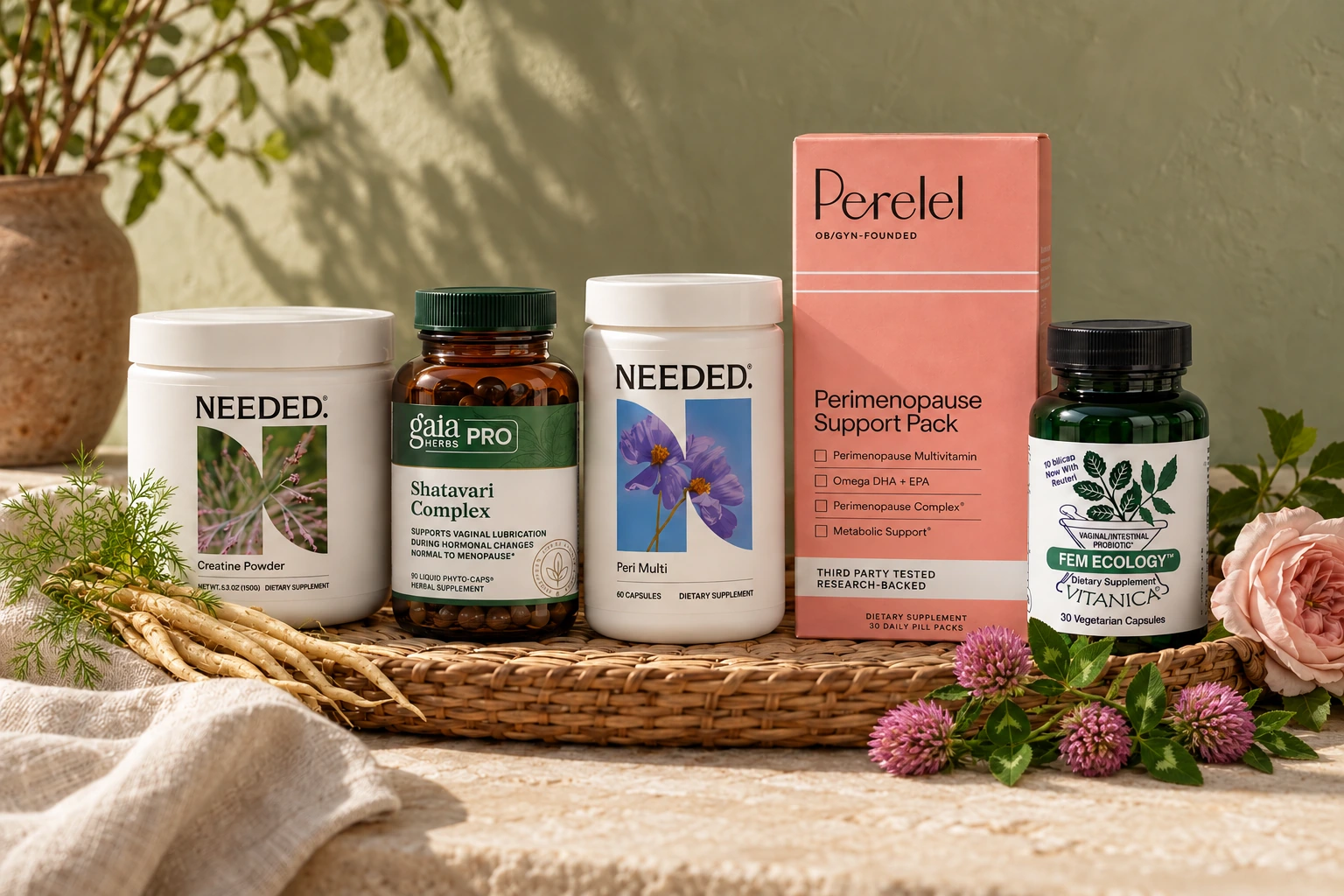
Botanical medicine begins with knowing the plant. Vitex has been studied for certain premenstrual symptoms; shatavari’s Ayurvedic restorative tradition is now being explored in human sexual-wellness trials. These are different questions and different preparations. Neither plant belongs in every woman’s protocol.2, 3
I would build natural care around the person: nourishing meals, sleep, movement that supports rather than depletes, practices for stress, and carefully selected botanicals when appropriate. For painful intimacy or pelvic symptoms, additional care from a pelvic-health specialist may belong alongside those foundations.
Explore the detail in The Feminine Rhythm and Botanical Aphrodisiacs, including preparation-specific research and relevant cautions.
Botanical wisdom, through Dr. Tori Hudson’s lens
Dr. Tori Hudson’s published work on women’s health brings a careful botanical perspective to the changing body. I appreciate the attention she gives to the particular experience: interrupted sleep, night sweats, changing comfort, and the ways these can overlap. There is a woman inside the symptom list.
Shatavari, through the menopausal transition. In her 2026 discussion, Hudson considers research on Asparagus racemosus, a plant with a longstanding place in Ayurvedic women’s care. She highlights an eight-week randomized trial involving 70 women, in which a specific root extract improved menopause symptom scores compared with placebo. She also notes the small study size, short follow-up, and manufacturer funding. This is promising research on a particular preparation; it does not establish the same effects for every shatavari product.8, 9
Lemon balm and valerian, when sleep changes. Hudson also discusses a four-week trial of a combined preparation in 100 postmenopausal women with sleep difficulties. Sleep quality improved more in the botanical group. Her wider point is useful: notice the pattern of disrupted sleep, including night sweats, difficulty settling, and waking during the night. The broader research on valerian is mixed, and the combination studied is distinct from a cup of lemon balm tea.10, 11
That is where a thoughtful functional and naturopathic approach begins for me: with the person, the plant, the preparation, and the reason for choosing it. Traditional knowledge gives us a rich starting place. Modern research adds another way to understand what we are working with.
Functional labs with a purpose
What would the result help us understand? That is the question I want at the beginning of a testing conversation. Missing periods, heavy bleeding, persistent fatigue, and changes in desire need different assessments.
For absent periods, a clinician may consider pregnancy testing and selected thyroid, prolactin, or reproductive-hormone tests. During typical perimenopause after 45, the history often tells us more than a fluctuating hormone measurement.4, 5
Your story and your results belong together. Persistent symptoms, bleeding after menopause, or significant pelvic pain deserve additional care and appropriate specialist assessment.
A fuller kind of feminine health
You can be scientifically curious and spiritually alive. You can honor traditional knowledge and ask precise questions about a new extract. You can listen inward and seek help.
That is the kind of feminine health I want to explore here: informed, sensual, thoughtful, and spacious enough for the woman you are becoming.
References & further reading
- NCCIH — Meditation and Mindfulness: Effectiveness and Safety
- NCCIH — Chasteberry
- Ademola et al. — Effects of Shatavari root extract on sexual wellness in women
- ASRM — Current evaluation of amenorrhea
- NICE NG23 — Menopause: identification and management
- Heraklion Archaeological Museum — Gold bee pendant
- Laura Perry — The Melissae: Minoan Bee Goddesses
- Dr. Tori Hudson — Shatavari: Perimenopause and Menopause; Looking Good Again
- Swaroop & Swaroop — Asparagus racemosus Root Extract (SheVari4) Alleviates Menopausal Symptoms
- Dr. Tori Hudson — Valerian/Lemon balm in Menopausal Sleep Problems
- Taavoni, Nazem Ekbatani & Haghani — Valerian/lemon balm use for sleep disorders during menopause
For education and reflection. Individual needs vary. For persistent symptoms or personal guidance, seek additional care from a qualified clinician or appropriate specialist.