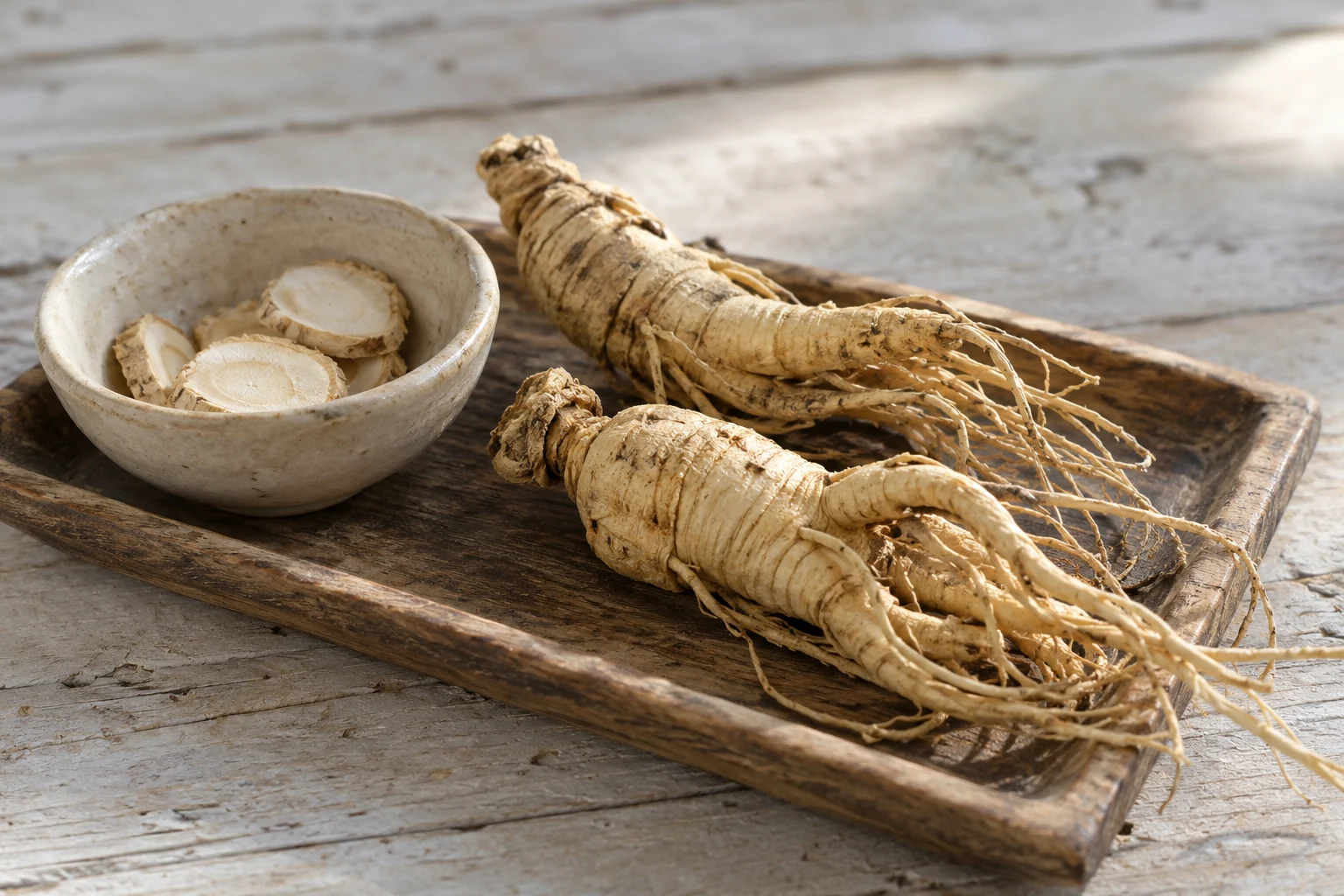
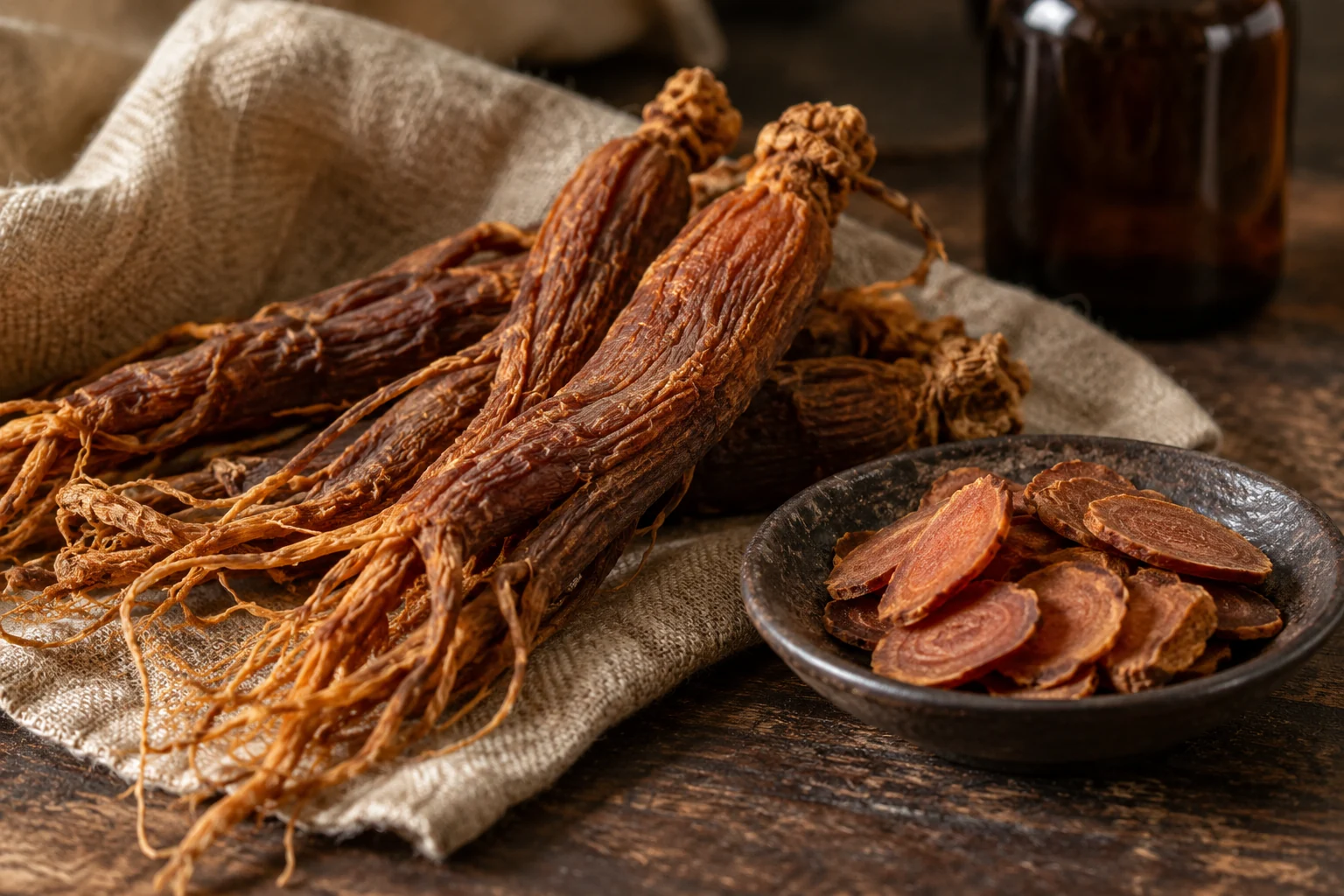
Dong quai has been part of Chinese herbal care for women for generations. The root of Angelica sinensis is traditionally associated with nourishment and movement, particularly within carefully composed formulas for different chapters of a woman’s life.
- Women’s herbal traditions
- Circulatory research
The whole-pattern approach
Its traditional role begins with the person’s pattern: the cycle, the kind of discomfort, and the surrounding experience of energy and wellbeing. That gives dong quai a more individual context than a general hormone-support label.
Rooted in the formula
Dong quai is often understood through the botanicals beside it. An identified root extract makes its traditional character easier to explore, while the clinical evidence—including a trial of the root used alone—is explained below.
From the plant to my apothecary
My selection.
This Angelica sinensis root extract brings a classic Chinese botanical into a water, alcohol, and glycerin preparation. I chose it for a clear expression of the root’s traditional identity in women’s herbal care.
I may earn income from purchases through my Fullscript shop.
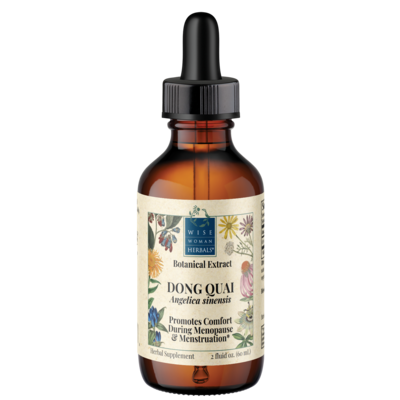
Meet the botanical
Angelica sinensis
- Family
- Apiaceae
- Parts in focus
- Root, commonly used within traditional Chinese herbal formulas; the featured product is a liquid root extract.
Common uses
Traditional and everyday uses, at a glance.
| Common use | Part & preparation |
|---|---|
| Women’s herbal traditions | Root, often within individualized multi-herb formulas |
| Menopause research | Single-herb trial did not demonstrate symptom benefit over placebo |
A short history
Dong quai root has a long history in traditional Chinese medicine and is frequently used with other herbs in formulas.
Energy & character
Nourishment and circulation are themes in its traditional context. These concepts are not equivalent to measured hormone changes.
Symbolism
For a personal ritual, the root can represent attending to life’s cycles without forcing every season to feel the same.
The research & references
What the studies tell us
The cited randomized trial found no advantage over placebo for menopausal symptoms when dong quai was used alone. Results from multi-herb formulas cannot be assigned to this single-herb extract.
Clinician-guided selection. Review the preparation and your health history with a qualified naturopathic or functional medicine practitioner.
Care with this plant.
Avoid during pregnancy and breastfeeding. Dong quai may increase bleeding risk with blood thinners. Obtain individual advice with a bleeding disorder, a hormone-sensitive condition, or planned surgery. Persistent or heavy bleeding requires assessment.
Research relates to the species, preparation, and people studied. Findings for an ingredient do not establish the effects of the complete featured formula.
Explore the sources
About this article & supplement statements
These statements have not been evaluated by the Food and Drug Administration. These products are not intended to diagnose, treat, cure, or prevent any disease.
Medicine Wild offers botanical education from Dr. Michele Burklund’s naturopathic and functional medicine perspective. This article is for informational purposes and does not replace individual medical advice, diagnosis, or treatment. A qualified practitioner can help you choose care suited to your health history.