Lion’s mane has a memorable appearance and an equally interesting research story. Hericium erinaceus is being explored for memory and cognitive wellbeing. Small human trials have reported encouraging results with particular preparations, making it a mushroom worth getting to know.
- Cognitive research
- Medicinal mushroom
- Traditional food
The clarity connection
One placebo-controlled study found improved cognitive scores during use in older adults with mild cognitive impairment. The findings are early, but they give a focused reason for the interest in this remarkable mushroom.
Know the part in your capsule
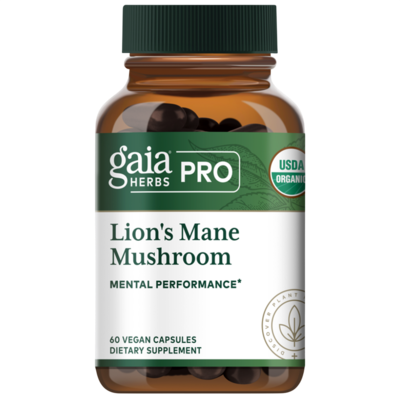
The cascading white mushroom is the fruiting body; mycelium is the thread-like fungal network. Preparations can use either. My featured selection identifies fruiting-body extracts, giving this mushroom’s story a clear connection to the bottle.
From the plant to my apothecary
My selection.
I chose this preparation because it identifies Hericium erinaceus fruiting-body extracts. That clarity connects the remarkable mushroom with what is actually in the capsule and gives the cognitive-wellbeing conversation a useful starting point.
I may earn income from purchases through my Fullscript shop.
Meet the botanical
Hericium erinaceus
- Family
- Hericiaceae
- Parts in focus
- Fruiting body; the featured capsules contain fruiting-body extracts, not mycelium.
Common uses
Traditional and everyday uses, at a glance.
| Common use | Part & preparation |
|---|---|
| Food tradition | Properly identified, cooked mushroom |
| Cognitive research | Specific mushroom preparations studied in small human trials |
A short history
An edible mushroom with a place in East Asian food and herbal traditions, lion’s mane now also appears in clinical research on cognition.
Energy & character
Its soft, cascading form invites a quieter image of nourishment. This is a sensory interpretation, not a physiological classification.
Symbolism
For a personal ritual, lion’s mane can represent attention: returning to one thing, with enough space to notice it.
The research & references
What the studies tell us
The 2009 trial was small and evaluated a specific preparation in adults with mild cognitive impairment. Its findings are preliminary and do not establish dementia prevention, long-term benefit, or equivalence across powders, fruiting-body extracts, and mycelium products.
Care with this plant.
Avoid if you are allergic to mushrooms. The featured product is not for use during pregnancy; seek individual guidance during breastfeeding or if you take medicines or have a medical condition. Persistent or worsening memory changes deserve assessment rather than a supplement alone.
Research relates to the species, preparation, and people studied. Findings for an ingredient do not establish the effects of the complete featured formula.
Explore the sources
About this article & supplement statements
These statements have not been evaluated by the Food and Drug Administration. These products are not intended to diagnose, treat, cure, or prevent any disease.
Medicine Wild offers botanical education from Dr. Michele Burklund’s naturopathic and functional medicine perspective. This article is for informational purposes and does not replace individual medical advice, diagnosis, or treatment. A qualified practitioner can help you choose care suited to your health history.