Oregon grape belongs to the bitter-root tradition of herbal medicine. Mahonia species have been used in formulas concerned with digestion and the skin. Their vivid root color and distinctly bitter character give them a memorable place in the apothecary.
- Bitter tradition
- Skin traditions
A topical point of interest
A clinical trial of a specific Mahonia aquifolium cream found improvements in mild-to-moderate psoriasis. That gives the plant a focused skin-care research story, tied to that topical preparation.
Understand the root extract
The featured liquid preparation belongs to the oral bitter-root tradition. In naturopathic care, its place begins with the individual’s skin, digestive pattern, and wider health picture. The differences between preparations are explained in the research below.
From the plant to my apothecary
My selection.
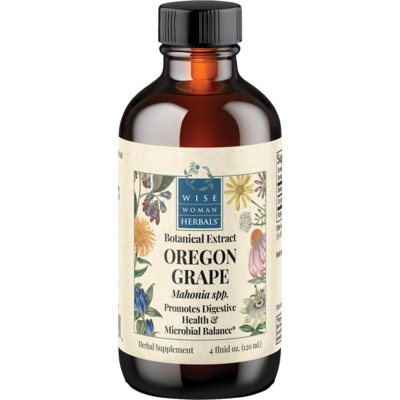
I feature this Wise Woman Herbals liquid preparation for Oregon grape’s traditional bitter-root role. The manufacturer describes root bark, giving the plant’s yellow, bitter material a clear place in the formula.
I may earn income from purchases through my Fullscript shop.
Meet the botanical
Mahonia spp. (including Mahonia aquifolium)
- Family
- Berberidaceae
- Parts in focus
- Root/root bark in liquid extracts; topical preparations studied for skin are distinct products.
Common uses
Traditional and everyday uses, at a glance.
| Common use | Part & preparation |
|---|---|
| Traditional bitter-root preparations | Identified root or root-bark extract |
| Skin research | Specific topical cream; not the featured oral extract |
A short history
Oregon grape appears in North American herbal practice as a bitter root. Modern skin research has evaluated particular topical preparations.
Energy & character
Bitter in character, this is a plant whose preparation deserves attention before its traditional categories are turned into promises.
Symbolism
As a personal metaphor, its evergreen character can suggest steadiness through changing seasons.
The research & references
What the studies tell us
A randomized trial of 200 participants evaluated a proprietary topical Mahonia aquifolium cream. Its findings cannot be transferred to this oral extract, other Mahonia species, or an isolated constituent.
Clinician-guided selection. Review the preparation and your health history with a qualified naturopathic or functional medicine practitioner.
Care with this plant.
The featured product is contraindicated in pregnancy. Seek qualified guidance during breastfeeding or with medicines and medical conditions. Do not use the oral extract as a homemade skin treatment. Persistent, painful, or infected skin symptoms need assessment.
Research relates to the species, preparation, and people studied. Findings for an ingredient do not establish the effects of the complete featured formula.
Explore the sources
About this article & supplement statements
These statements have not been evaluated by the Food and Drug Administration. These products are not intended to diagnose, treat, cure, or prevent any disease.
Medicine Wild offers botanical education from Dr. Michele Burklund’s naturopathic and functional medicine perspective. This article is for informational purposes and does not replace individual medical advice, diagnosis, or treatment. A qualified practitioner can help you choose care suited to your health history.