St. John’s wort is one of the more extensively studied botanicals in mood care. Research on defined Hypericum perforatum extracts suggests benefit for some adults with mild to moderate depression. Its traditional history stretches much further back.
- Nervine tradition
Make room for emotional wellbeing
Mood is shaped by many things: nourishment, sleep, daylight, connection, and the circumstances of a life. A naturopathic approach begins by understanding that wider picture and the pattern behind a change in how someone feels.
A preparation with a purpose
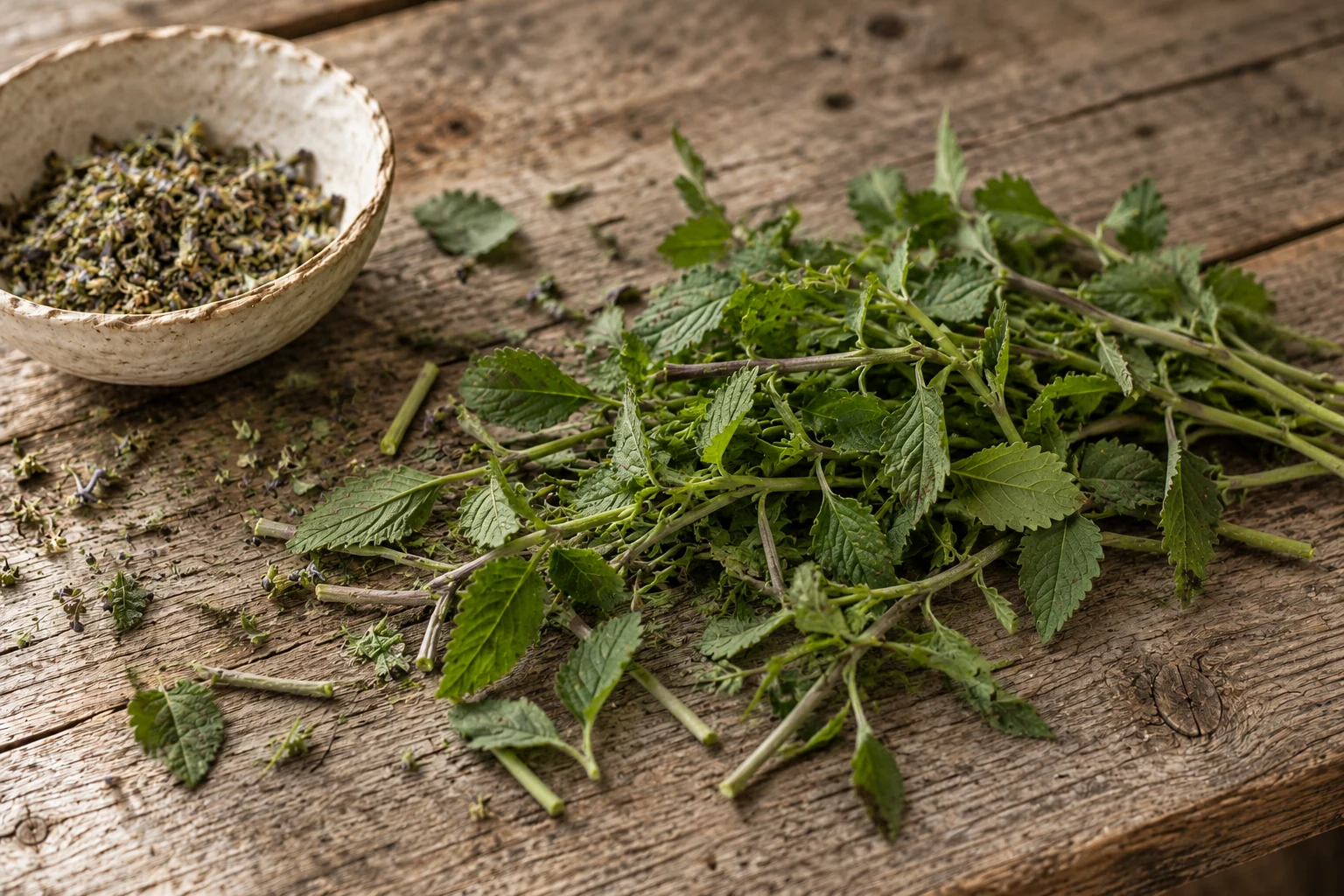
The flowering aerial parts give this herb its apothecary identity. The exact extract and an individual review are central to its place in care, with the research and important interaction details together below.
From the plant to my apothecary
My selection.
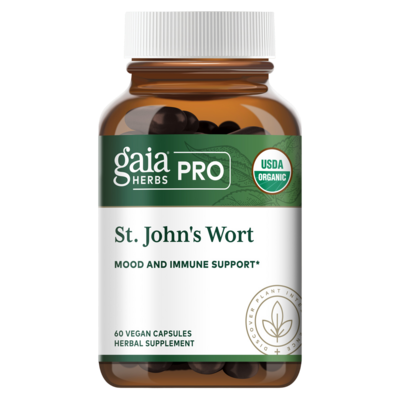
Gaia’s preparation identifies Hypericum perforatum aerial-parts extract and hypericins. I feature it as a specific botanical within an individualized approach to mood, with the research and interaction details together below.
I may earn income from purchases through my Fullscript shop.
Meet the botanical
Hypericum perforatum
- Family
- Hypericaceae
- Parts in focus
- Flowering aerial parts; oral extracts and topical infused oils are different preparations.
Common uses
Traditional and everyday uses, at a glance.
| Common use | Part & preparation |
|---|---|
| Mood research | Defined oral extracts; clinician-guided selection |
| Traditional topical preparations | Infused oils; not equivalent to the oral extract |
A short history
St. John’s wort has a long European herbal history. Modern clinical research has concentrated on defined extracts taken by mouth for mood symptoms.
Energy & character
Its bright yellow flowers suggest warmth and summer light; this imagery should not be confused with a predictable effect on mood.
Symbolism
As a personal metaphor, the flower can represent making room for light while also making room for support.
The research & references
What the studies tell us
Evidence is strongest for certain oral extracts in mild to moderate depression. Results do not establish suitability for severe depression or equivalence between every extract. The interaction profile is a major part of the decision, not a minor footnote.
Clinician-guided selection. Review the preparation and your health history with a qualified naturopathic or functional medicine practitioner.
Care with this plant.
Do not combine with antidepressants or other serotonin-active medicines without the prescribing clinician’s direction. It can reduce the effectiveness of contraceptive pills and many other medicines. Avoid during pregnancy or breastfeeding and with a history of mania unless specifically managed by an appropriate clinician. It may increase sun sensitivity. Persistent depression needs professional assessment.
Research relates to the species, preparation, and people studied. Findings for an ingredient do not establish the effects of the complete featured formula.
Explore the sources
About this article & supplement statements
These statements have not been evaluated by the Food and Drug Administration. These products are not intended to diagnose, treat, cure, or prevent any disease.
Medicine Wild offers botanical education from Dr. Michele Burklund’s naturopathic and functional medicine perspective. This article is for informational purposes and does not replace individual medical advice, diagnosis, or treatment. A qualified practitioner can help you choose care suited to your health history.