
Pregnancy herbs
Simple flavors, everyday nourishment and a considered approach to common discomforts.
Pregnancy changes the questions we ask of a plant. Which part? In food, tea or an extract? At what stage of pregnancy, and for what reason? A familiar kitchen ingredient and a medicinal dose belong to different decisions.
Begin with food you enjoy and can tolerate. When nausea, reflux or another symptom persists, bring the concern to your maternity team along with the exact product you are considering.
Nutrition, taste & common uses
| Plant | Taste & form | Nutrition | Common context |
|---|---|---|---|
| Ginger | Warm and pungent; fresh root in food, tea or a specified product. | Small culinary amounts add flavor, rather than substantial nutrients. | Nausea and vomiting of pregnancy. Discuss medicinal products with your maternity clinician; ginger can aggravate heartburn. |
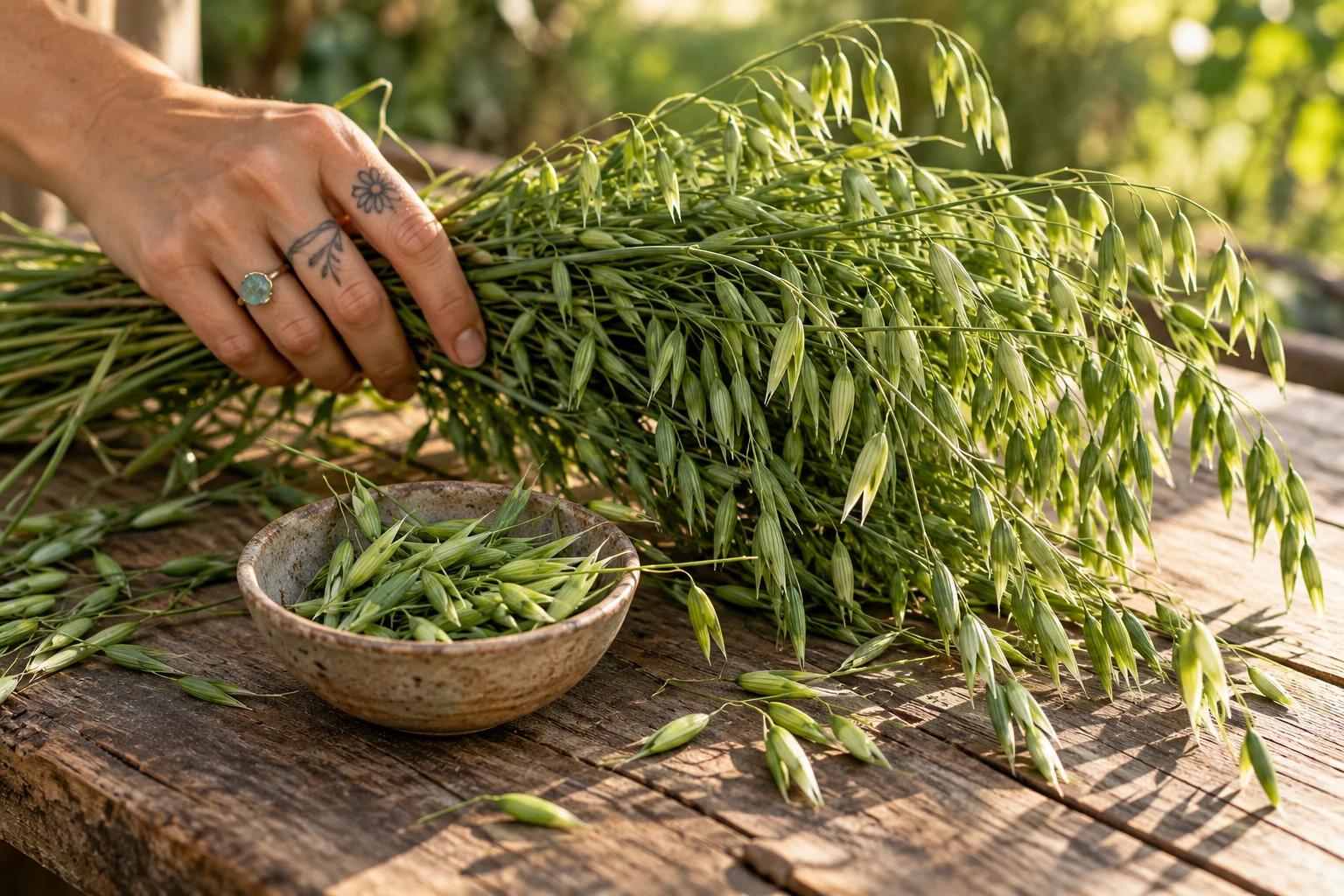
| Oats | Mild, soft and creamy as cooked grain. | Carbohydrate, fiber and some protein. | An adaptable meal for everyday nourishment and bowel regularity. Choose certified gluten-free oats if needed for celiac disease; green-oat extracts are a different preparation. |
| Cranberry | Tart; fruit or juice, with sweetness varying by product. | Whole fruit supplies fiber; juice has little fiber. | Food and urinary-health traditions; some products are used for recurrent-UTI prevention. Not a treatment for a current UTI. Urinary burning, fever or back pain in pregnancy needs prompt medical assessment. |
| Raspberry leaf | Grassy and lightly astringent; leaf tea. | Do not rely on tea to meet iron or other prenatal nutrient needs. | A traditional late-pregnancy and birth herb. Not a do-it-yourself labor-induction method. Discuss use with your maternity team; safety remains uncertain. |
A short history
Raspberry leaf has a place in midwifery traditions, while ginger’s kitchen and medicinal histories extend far beyond pregnancy. Contemporary women’s herbal care carries these traditional questions into decisions specific to the person, preparation and stage of pregnancy.
Energy & character
Ginger feels warming and pungent; oats is mild and substantial; cranberry is sharply tart; raspberry leaf is gently drying on the tongue. Here, energy begins with an observable taste or texture.
Symbolism
For personal reflection, a warm bowl or a carefully chosen cup can symbolize being cared for. A pregnancy ritual can make room for comfort and connection without requiring a particular herb or a particular birth experience.
Nutrition belongs on the plate, too
Herbal teas do not replace meals or a prenatal supplement. Ask about iron, folate, iodine, choline and other nutrients in the context of your diet. If nausea limits what you can eat, small tolerable meals and timely symptom care matter more than a perfect food plan.
A considered place for raspberry leaf
Raspberry leaf is commonly associated with preparing for birth. That tradition does not establish a reliable way to induce labor or guarantee an easier delivery. The UK Committee on Toxicity judged pregnancy risk to be low but highly uncertain; choose with your maternity team rather than following a universal tea schedule.
References
- Aviva Romm · Herbal medicines in pregnancy: safety
- Aviva Romm · Herbs for pregnancy and birth
- Dr. Tori Hudson · Ginger root extract during pregnancy (2022)
- NCCIH · Ginger
- NCCIH · Cranberry
- UK Committee on Toxicity · Raspberry leaf in the maternal diet (2024)
- NIH Office of Dietary Supplements · Pregnancy
- American Botanical Council: Oat, HerbalGram 135 (2022)
- NIDDK: Eating, Diet, and Nutrition for Celiac Disease