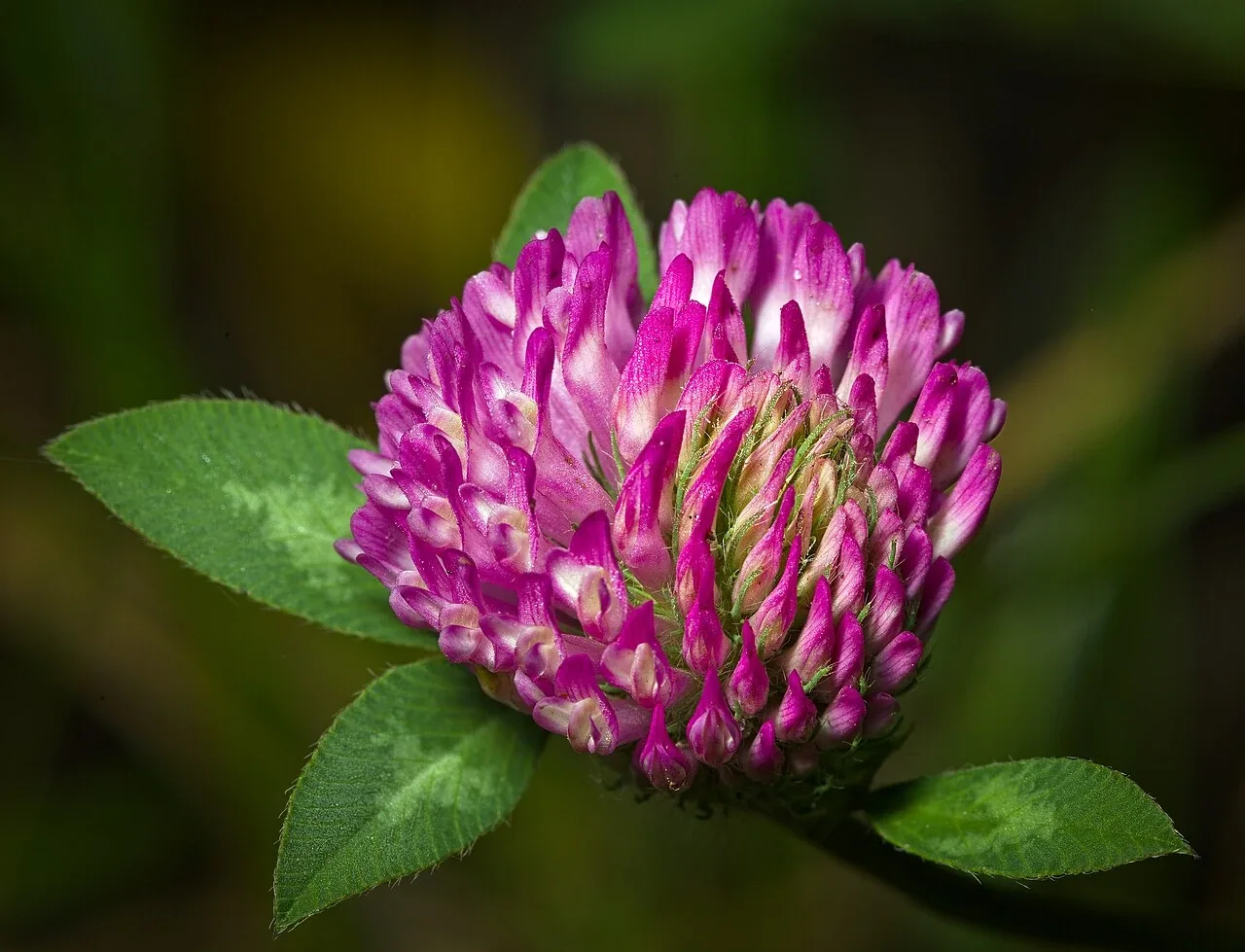
Look closely at a red clover blossom. What seems to be one pink flower is a whole gathering of tiny ones.
- Isoflavones
- Menopause research
- Flowering-top tea
Look a little lower and you may see a pale V brushed across each of its three leaflets. You can get to know this meadow plant quite well before anyone says the word “menopause.” Its flowering tops smell faintly of honey and give an infusion a soft, grassy taste.
So how did a hayfield flower find its way into the conversation about hot flashes? The answer begins with isoflavones in the plant and gets more interesting when women are asked what actually changed for them.
What makes red clover interesting?
A flowering top for the teapot
Dried flowering tops have a place in Western herbal tea traditions. Think of the cup as a way to taste the plant. Most menopause trials used concentrated extracts with a measured amount of isoflavones.
A particular kind of phytoestrogen
Two of red clover’s characteristic isoflavones are formononetin and biochanin A. The body can transform them into daidzein and genistein, compounds that can interact with estrogen receptors. That chemistry gives researchers a reason to study the plant.
A question worth asking about hot flashes
Some women in trials of red clover extracts experienced fewer hot flashes. The size of the benefit depended on the study. When waking in a sweat is the part you most want to change, the number of uninterrupted nights may mean more to you than a daily count alone.
The plant’s personality
- Botanical name
- Trifolium pratense L.
- Family
- Fabaceae, the pea family
- Other common name
- Meadow clover
- Parts used
- Flowering tops and, in some preparations, other aboveground parts
- Taste and scent
- Mild and grassy in the cup, with a honeylike scent to the fresh flower heads
- Where it grows
- Meadows, sunny field edges and pastures. Native to parts of Europe, Asia and northern Africa, it is now widely cultivated.
Farmers have long had their own reasons to value this short-lived perennial. It feeds grazing animals and, through its partnership with nitrogen-fixing bacteria, helps enrich the soil. Follow a stem to its rose-purple head and you can see the individual pea-family flowers radiating outward.
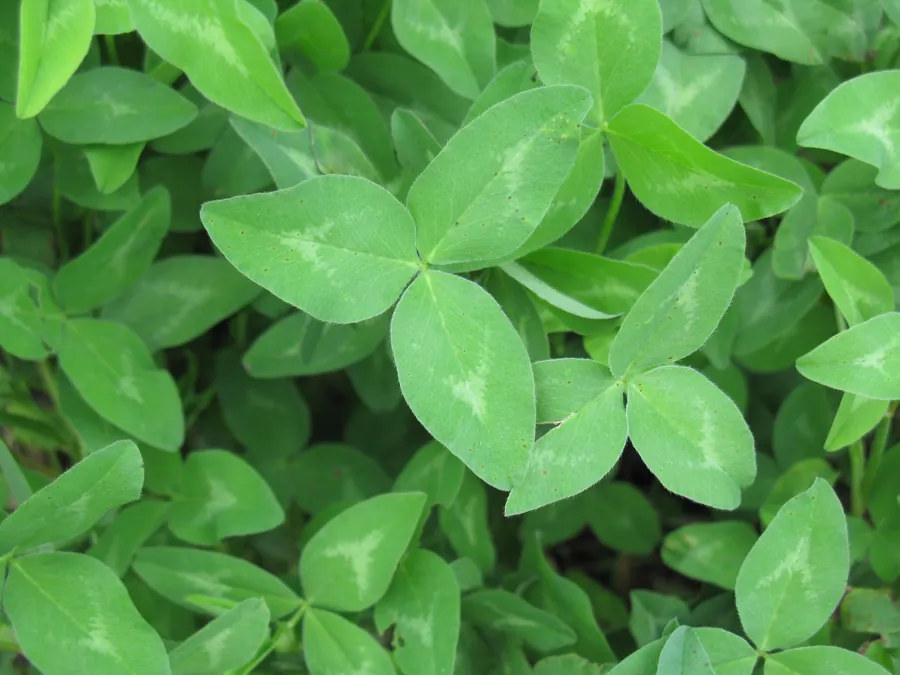
Photo credit
Trifolium pratense · Harry Rose · CC BY 2.0. Resized and converted to WebP.
The meadow maiden
Older Western herbals placed red clover among the “blood purifiers.” The term records how herbalists once organized their remedies. It tells us little about a particular toxin, a measurable change in blood, or what a woman with night sweats might experience.
In Seven Plants for a Woman’s Ritual, red clover is the Meadow Maiden. A field changing through the seasons gives this flower its meaning in the guide. The question it leaves with you is a personal one.
What am I being asked to change, and what would I like to keep?
What women reported in the research
In the Isoflavone Clover Extract study, 252 women experiencing frequent hot flashes were assigned to one of two red clover extracts or a placebo. At 12 weeks, all three groups averaged about five hot flashes a day. The extracts offered no meaningful advantage at that point. In a separate yearlong trial, hot flashes and night sweats also improved in both the red clover and placebo groups.
Pooling trials gives a somewhat different picture. A 2021 review estimated about 1.7 fewer hot flashes per day with red clover extracts than with placebo, but results varied widely. A 2026 review of nine randomized trials also found a modest average reduction in frequency. The studies tested different amounts and formulations over periods ranging from 12 weeks to a year. A benefit with a particular extract is plausible, while an individual woman’s response remains difficult to predict.
For the woman reading a label at the kitchen counter, there’s another wrinkle. These trials tested measured isoflavones. They give us no reliable way to say how many cups of flowering-top tea would have the same effect.
The flower, the bottle and the label
Flowering-top infusion
A tea lets you experience the aroma and taste of the flowering plant. The plant material and the way you steep it affect what ends up in the cup. Research on a named isoflavone extract cannot tell you what to expect from that cup.
Tincture
A liquid extract label may identify the plant part, the solvent and the ratio of plant to liquid. That ratio describes how the tincture was made. On its own it won’t tell you how many milligrams of isoflavones a serving contains.
Powders and standardized extracts
Capsules can hold either powdered herb or a concentrated extract. “500 mg of red clover” and “40 mg of red clover isoflavones” measure different things. The first describes the weight of the listed material. The second tells you how much of a group of constituents it supplies.
From my apothecary
Start with what you want to change. If hot flashes wake you at night, jot down how often they wake you and whether you get back to sleep. That gives you something meaningful to revisit if you and your clinician decide to try a preparation. Bring the label to that conversation so you can compare the plant part, extract and isoflavone amount with what researchers actually studied.
Care with red clover
Avoid medicinal red clover supplements during pregnancy or breastfeeding. If you have a hormone-sensitive cancer, avoid these supplements and ask your oncology team about options for hot flashes. If you take a blood thinner or an antiplatelet medicine, have your pharmacist check the product before use. A bleeding interaction is possible, and its size in people is uncertain.
Curious about red clover?
What part of red clover is used in tea?
The flowering tops of Trifolium pratense are the traditional tea material. The pink head is made of many small flowers, and a flowering top can include the nearby leaves and stem. Other preparations may use more of the aboveground plant. Look for the part named on the label.
Can red clover help with menopausal hot flashes?
Some standardized extracts modestly reduced hot-flash frequency when trial results were pooled. In a large individual trial, women assigned to either of two extracts had results similar to women taking placebo at 12 weeks. The research offers a possibility of relief and little guidance for predicting who will notice it.
Does red clover raise estrogen?
Red clover supplies phytoestrogens, plant compounds that can interact with estrogen receptors. Receptor activity and a rise in your own blood estradiol are different measurements. A supplement’s isoflavone content alone cannot predict an estradiol level, correct a particular lab result or tell you whether a symptom will improve.
Is red clover tea equivalent to a menopause supplement?
A tea, a tincture and a capsule made with a standardized extract deliver different mixtures of plant constituents. The studies on hot flashes typically specified the extract and its isoflavones. There is no established conversion from a cup of tea to the isoflavone amount used in those trials.
How do red clover and black cohosh differ?
Red clover is a legume with flowering tops used in herbal preparations and an identifiable group of isoflavones. Black cohosh is a different species, Actaea racemosa, whose roots and rhizomes are used. Each plant has its own preparations, safety considerations and body of menopause research.
Can I use red clover after hormone-sensitive breast cancer?
Memorial Sloan Kettering advises people with hormone-sensitive cancers to avoid red clover because of its estrogen-like activity. If you have a history of breast cancer or take endocrine therapy, bring the product label to your oncology team before using a red clover supplement for hot flashes.
Research & references
The botany references identify the plant and the parts used in herbal preparations. The clinical trials and reviews below concern particular isoflavone extracts.
- NC State Extension · Trifolium pratense. Field characteristics, ecology and fragrance
- American Herbal Pharmacopoeia · Red clover flowering tops, aerial parts and dry extracts
- Tice and colleagues (2003) · The Isoflavone Clover Extract randomized trial, JAMA
- Geller and colleagues (2009) · A 12-month randomized trial of red clover and black cohosh for vasomotor symptoms
- Kanadys and colleagues (2021) · Systematic review of red clover extracts and menopausal hot flashes
- Jiang and Wu (2026) · A GRADE-assessed systematic review of red clover and hot flashes
- National Center for Complementary and Integrative Health · Red clover evidence and safety
- Memorial Sloan Kettering Cancer Center · Red clover, contraindications and herb–drug interactions
- National Center for Complementary and Integrative Health · Black cohosh
About this article & supplement statements
These statements have not been evaluated by the Food and Drug Administration. These products are not intended to diagnose, treat, cure, or prevent any disease.
Medicine Wild offers botanical education from Dr. Michele Burklund’s naturopathic and functional medicine perspective. This article is for informational purposes and does not replace individual medical advice, diagnosis, or treatment. A qualified practitioner can help you choose care suited to your health history.