Search the whole journal across all categories, or explore the plant library:
Plant intelligence · One plant at a time
The Botanical Edit.
Know the plant. Understand the preparation.
A plant name on the front of a bottle is only the beginning. My botanical approach looks more closely: the species, the part of the plant, how it was prepared, and why that preparation belongs in your care. This edit is a guide to choosing single-plant formulas with that same attention.
Opens my Botanical Edit on Fullscript. Choose individual products and review current labels, prices, and availability.
Botanical Medicine & Herbal Supplements · Medicine Wild
From the doctor · A naturopathic perspective
A note from Dr. Michele.
Sometimes you are drawn to one particular plant. I want you to know that plant more closely: its name, the part being used, and the way it has been prepared. A root, a leaf, a tincture, and a capsule each tell a different story.
These are the details I look for in the brands I trust. This edit focuses on single-plant preparations—capsules, tinctures, and glycerites—for those who feel called to a specific plant at a specific time, with thoughtful attention to quality and individual suitability.
What draws you to this plant: a food tradition, a tea ritual, or a specific health question? The answer shapes the preparation and the evidence you need.
Choose one plant deliberately
A single-plant formula can make the ingredient story easier to follow. It can still contain carriers, alcohol, glycerin, or capsule materials, so read the complete label.
Keep the whole day in view
Food, rest, movement, and your existing care remain the foundations. Herbal traditions can enrich daily life without requiring a new bottle for every concern.
02 · Inside the edit
Inside a thoughtful botanical label.
I look for brands that are clear about identity and preparation. The right format depends on the plant and the intended use; capsules, tinctures, and glycerites are not interchangeable measures of potency.
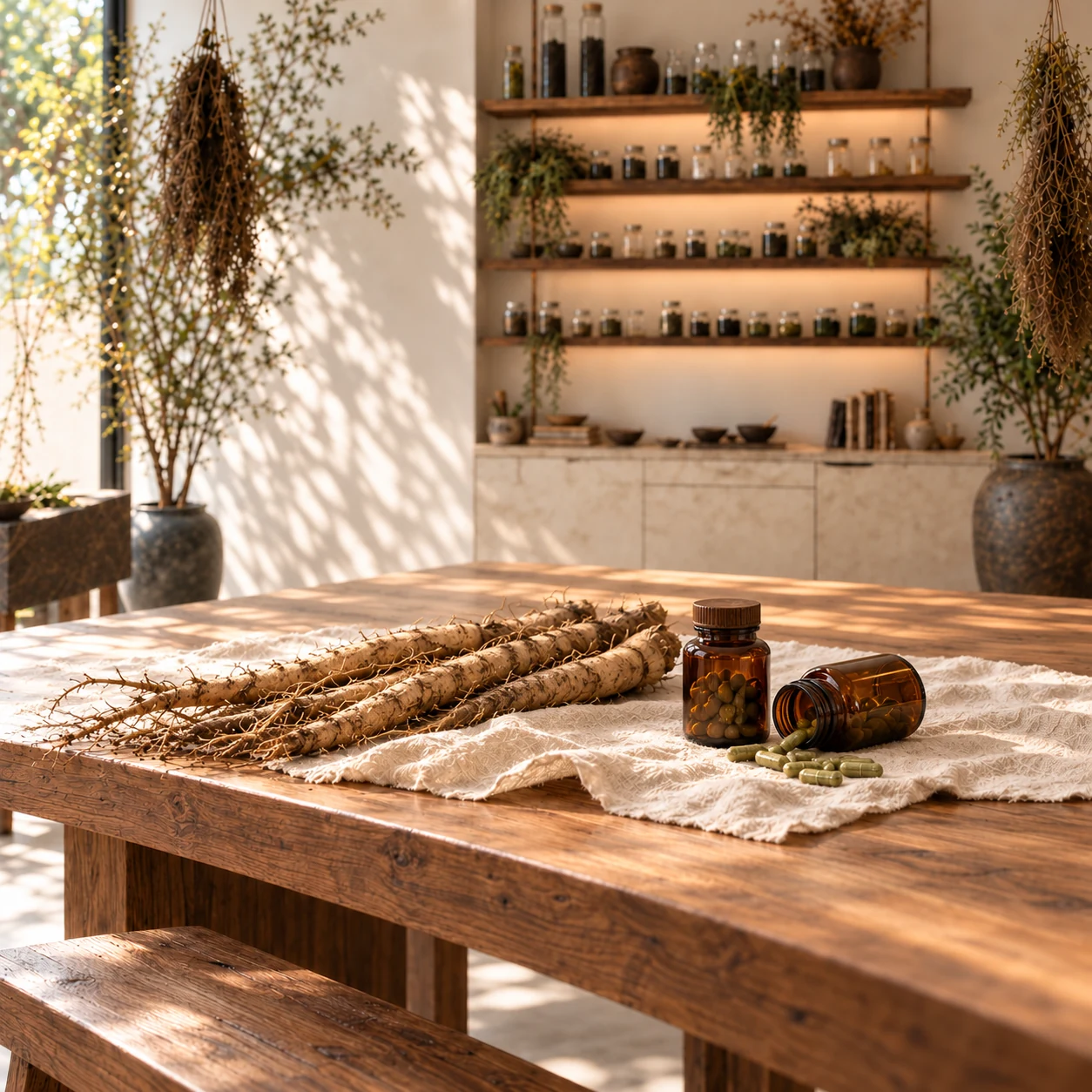
Look for the scientific name and the part used: root, leaf, flower, seed, fruit, or aerial parts. Burdock root and seed tell a different preparation story from leaf; ashwagandha root and root-plus-leaf extracts are not identical. Clear labeling makes a more informed choice possible.
The research on Identity & plant part
Botanical monographs identify the species, plant part, and preparations they address. The European Medicines Agency burdock-root monograph illustrates why a root extract cannot automatically borrow evidence for a seed, leaf, or different extract.
A capsule may hold powdered herb or a concentrated extract. Check which one, the amount, and any stated extraction or standardization information. Standardization describes a measured constituent; it is not a guarantee of a clinical result.
The research on Capsules
The format describes how a plant is prepared or delivered. It does not establish a health outcome by itself. When comparing research, match the botanical identity, extraction details, dose, and intended use to the product. NIH guidance explains why labels, quality, and interactions deserve separate attention.
A tincture generally uses alcohol and water to extract plant constituents. The herb-to-extract ratio, solvent, plant part, and serving information help describe the preparation. Consider alcohol content and medicines rather than assuming every liquid extract has the same use.
The research on Tinctures
The format describes how a plant is prepared or delivered. It does not establish a health outcome by itself. When comparing research, match the botanical identity, extraction details, dose, and intended use to the product. NIH guidance explains why labels, quality, and interactions deserve separate attention.
Glycerites use glycerin as part of the extraction or carrying liquid. Check whether the finished preparation also contains alcohol. Ask what a brand can document about plant identity, contaminants, and batch quality; a familiar name or attractive package alone cannot answer those questions.
The research on Glycerites & quality questions
The format describes how a plant is prepared or delivered. It does not establish a health outcome by itself. When comparing research, match the botanical identity, extraction details, dose, and intended use to the product. NIH guidance explains why labels, quality, and interactions deserve separate attention.
A botanical choice does not automatically require a test.
Start with your symptoms, history, and the reason for use. A laboratory panel is not a prerequisite for enjoying an herbal tradition or learning about a plant.
When evaluation is usefulIs there a symptom or condition that needs attention first?
Persistent fatigue, digestive changes, or other unexplained symptoms deserve an appropriate assessment. A clinician may recommend focused testing based on the story, rather than using an herb to cover up a change that needs investigation.
When monitoring may matterCould the plant interact with existing care?
Medicines, liver or kidney conditions, and treatment plans can change whether a preparation is suitable. Share the exact product label so your clinician can assess interactions and decide whether monitoring is needed.
References & further reading
Research, product information, and clinical guidance address different questions. Product pages describe formulations; they do not establish every claimed benefit.
Educational guidance, not an individual treatment plan. I may earn income from purchases through my Fullscript storefront. You do not need to purchase supplements or tests to explore Medicine Wild or take The Foundations.
About this article & supplement statements
These statements have not been evaluated by the Food and Drug Administration. These products are not intended to diagnose, treat, cure, or prevent any disease.
This Medicine Wild article is for informational and educational purposes only. It is not a substitute for professional medical advice, diagnosis, or treatment, and should not be relied upon for individual medical advice. Reading this article or purchasing through the Apothecary does not establish a patient–physician relationship with Dr. Michele Burklund.
The editorial perspective is Dr. Michele Burklund’s unless another source or expert is identified. Linked studies and product information are provided for context; they do not replace advice from a qualified healthcare professional who knows your health history. Consult your clinician about symptoms, medicines, pregnancy or breastfeeding, and the suitability of any supplement or test.