Search the whole journal across all categories, or explore the plant library:
Whole-person oral care · A biological dentistry perspective
The Oral Microbiome Edit.
A living ecosystem. A more thoughtful ritual.
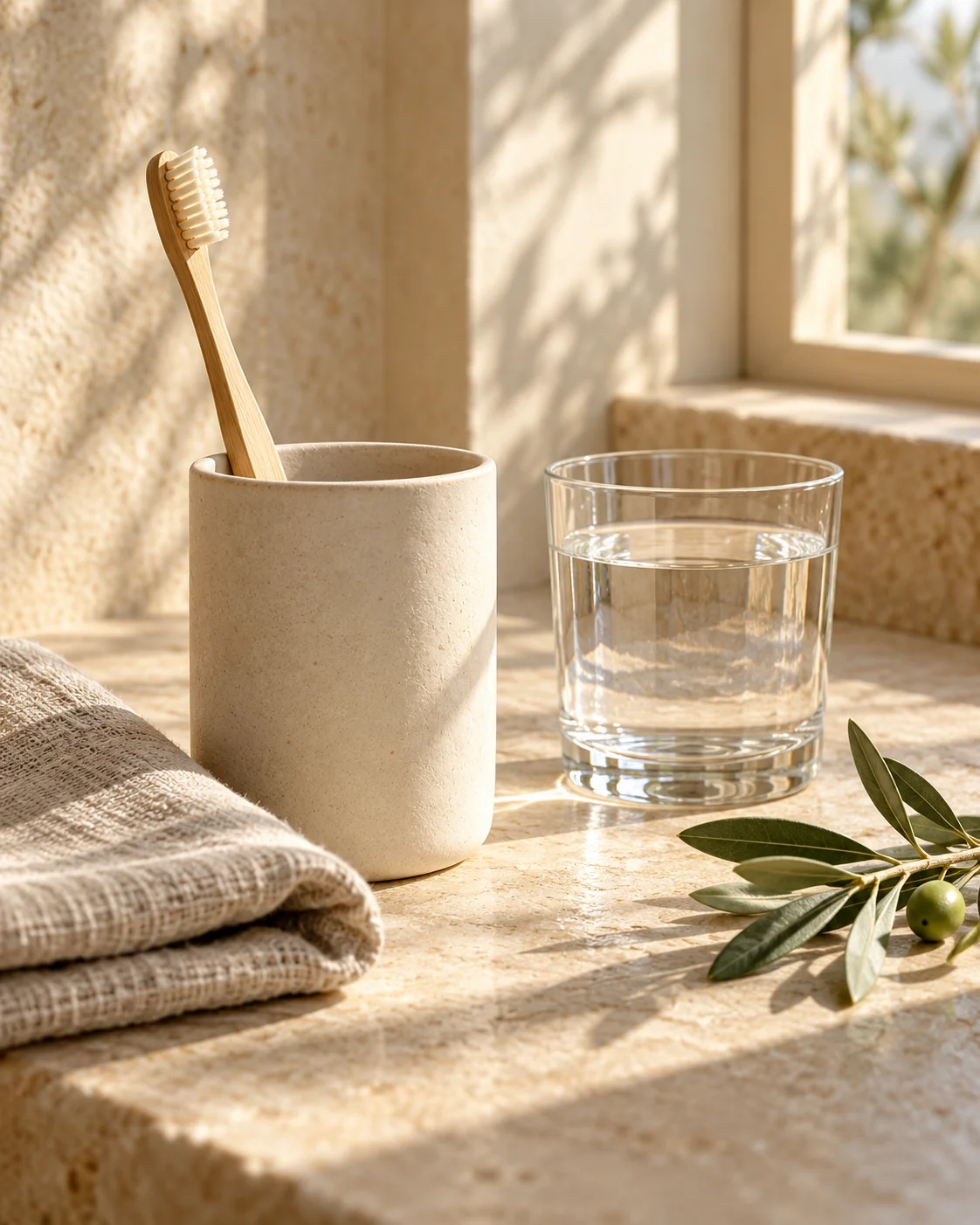
Your mouth is a meeting place: teeth and gums, saliva and microbes, nourishment and daily habit. Through the lens of biological dentistry, caring for it begins with understanding that living environment. This edit brings together three everyday tools—a botanical toothpaste, a stainless steel tongue cleaner, and a mint oil-pulling formula—with the foundations that make a routine meaningful.
Opens the collection on Fullscript. Choose individual products; current labels, availability, and prices are shown there.
Oral Microbiome, Gum Health & Daily Care · Medicine Wild
From the doctor · A naturopathic perspective
A note from Dr. Michele.
I’m drawn to the whole-person questions at the heart of biological dentistry. How does your mouth feel when you wake? Are your gums comfortable? What do your meals, saliva, and daily rituals tell us about the environment around your teeth?
As a naturopathic physician, I see this as a conversation to have alongside your dentist. These three selections bring plants, a simple reusable tool, and an Ayurvedic-inspired ritual into daily care. My starting point is a healthy foundation: consistent cleaning, nourishment, and a dentist who takes time to understand your story.
Gentle brushing twice daily and cleaning between the teeth remove the plaque and food that collect through the day. A soft brush, comfortable technique, and a toothpaste chosen with your dentist give the ritual its foundation.
Give saliva its place
Saliva washes away food, buffers acids, and brings minerals to tooth surfaces. Keep water close, and notice persistent dryness or waking with a parched mouth. Those observations can help your dentist explore what is affecting your oral environment.
Nourish the daily rhythm
Build meals around varied, nourishing foods and give your teeth a break from frequent sweetened drinks or snacks. What you eat—and how often your mouth encounters it—belongs in the oral-health conversation.
Listen to your gums
Comfortable gums are part of the picture. Repeated bleeding, tenderness, or a changing gumline is a reason to check in with your dentist. Regular examinations and cleanings help connect your home routine with what is happening beneath the surface.
The whole-person conversation
Find a dentist who sees the whole picture.
Biological dentistry brings a whole-person lens to oral care: the mouth, daily habits, health history, and the materials used in treatment. In goop’s interview, dentist Mamta Dalwani, DDS, describes an approach attentive to underlying contributors and conservative care. That makes a useful starting point for a conversation with your own dentist.
Ask how the dentist assesses gum health, saliva, nutrition, and relevant sleep or breathing concerns alongside the teeth. A thoughtful plan explains the findings, the priorities, and when another clinician’s input would help.
Ask about the treatment choices.
Discuss the purpose of each proposed procedure, the evidence, material options, alternatives, and expected costs. Whole-person care should make the decisions easier to understand and leave room for your questions.
Look beyond the label.
Choose a licensed dentist and ask about their specific training and experience. The IAOMT directory can help you find clinicians interested in biological dentistry; membership alone does not verify licensure or guarantee the quality of care.
A starting point for your search. Verify licensure and discuss the clinician’s approach before choosing care.
02 · Inside the edit
Three essentials. Distinct roles.
The botanical cleanse. The simple sweep. The slow swish. Each has a place in this collection, with a closer look at the ingredients and the research behind the ritual.
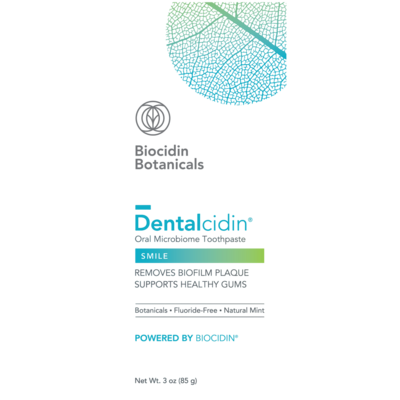
Plaque is a film that builds on tooth surfaces. The daily act of brushing helps lift it away, and Dentalcidin brings a botanical blend to that familiar ritual. Its hydrated-silica cleaning base is paired with Biocidin’s blend of plant and mushroom ingredients, including bilberry, grape seed, goldenseal, shiitake, and black walnut.
Peppermint, clove, and tea tree oils add an aromatic dimension; sorbitol and vegetable glycerin help retain moisture in the paste. I like looking at the complete formula: the ingredients that clean, the botanicals that give it character, and how it feels in your mouth. Bring the label to your dentist so its place in your cavity-prevention plan is clear.
Contains walnut. Check the full label for allergies and stop using it if irritation develops.
The research on Dentalcidin® Oral Microbiome Toothpaste
A 2025 case report described improved gum-bleeding measures during a regimen that included Dentalcidin toothpaste and Dentalcidin LS rinse, alongside other interventions. A manufacturer-reported pilot involved six people using both products for eight weeks. These observations are preliminary and cannot isolate the toothpaste’s effect. They do not establish that this formula selectively preserves beneficial microbes or prevents cavities. The ingredient link below is for the toothpaste, which differs from the LS rinse.
The tongue has its own textured landscape, where a coating of debris and microorganisms can collect. A tongue cleaner gently lifts that surface coating away. Small clinical studies have found short-term reductions in breath-related sulfur compounds after tongue cleaning—a practical reason this simple ritual has endured.
Banyan’s curved stainless steel tool is reusable and easy to rinse. With light pressure, draw it forward from a comfortable point on the tongue, rinsing the tool between passes. Think of a gentle sweep, not a scrub. This is a small addition to brushing and cleaning between the teeth, with no elaborate routine required.
Use light pressure. Avoid scraping sore or injured tissue, and stop if it hurts or bleeds.
The research on Stainless Steel Tongue Cleaner
A small comparative clinical trial found that tongue scraping reduced volatile sulfur compounds, one contributor to breath odor. A separate randomized crossover trial found short-lived improvements with mechanical tongue cleaning. These studies evaluated tongue-cleaning methods rather than this specific Banyan product. Persistent bad breath still deserves an assessment of the teeth, gums, tongue, and saliva.
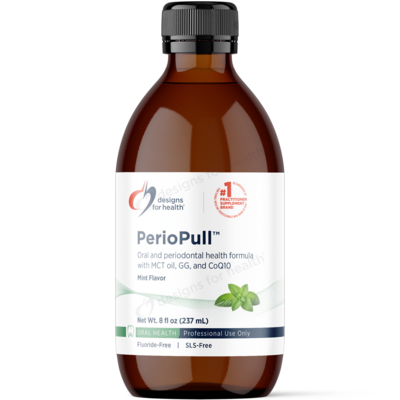
Oil pulling turns a few quiet moments into an oral-care ritual. PerioPull uses coconut-derived medium-chain triglycerides as its oil base, with mint for a fresh finish. The formula also includes CoQ10, geranylgeraniol from annatto, and bromelain.
CoQ10 has a role in cellular energy production and antioxidant activity; bromelain is a protein-breaking enzyme. Geranylgeraniol is a compound the body uses in several cellular pathways. Together, these ingredients distinguish the formula from a kitchen oil. Their individual biology gives us context; the research below separates that context from what has actually been studied in people. Use according to the current label, alongside brushing and interdental care, and spit out the oil rather than swallowing it.
For people who can safely swish and spit. Skip oil pulling if you have difficulty swallowing; check ingredients and suitability with your dental professional.
The research on PerioPull™ Mint
One 2025 trial found greater plaque reduction with sesame-oil pulling than with water after eight weeks. Another 2025 sesame-based trial found improvements in both groups, without a significant advantage over water. Neither tested PerioPull’s MCT, CoQ10, geranylgeraniol, and bromelain formula. These findings support studying oil pulling as an adjunct; they do not establish that this product treats gum disease or changes the microbiome in a beneficial way.
A useful assessment connects a measurement to your symptoms, history, and next step. Begin with a dental examination, then consider whether a more specific test would answer a question that remains.
Dental examination & periodontal chartingA map of the teeth, gums, and supporting tissues.
A dentist examines tooth surfaces and existing restorations, checks the gums, and measures the spaces around the teeth with a periodontal probe. Bleeding, pocket depths, recession, and clinically indicated images help build a picture of gum and tooth health. These findings guide decisions about cleaning, home care, and treatment, and provide a baseline for follow-up.
Saliva & dry-mouth assessmentUnderstanding the mouth’s natural moisture.
A saliva assessment explores persistent dryness, changes in comfort, and factors that may affect salivary function. Your dentist may assess saliva flow and review your health history, medicines, and daily habits. Saliva helps clear food and protect tooth surfaces; understanding why it is reduced can make the next step more specific than simply adding another rinse.
Oral microbial profileA closer look at the organisms in a sample.
A saliva or plaque sample can be examined for selected microorganisms, often using DNA-based methods. The report describes what the particular test detects; it is interpreted alongside gum measurements, symptoms, and treatment history. Ask whether the result would change a useful clinical decision. Finding an organism alone does not diagnose disease, and a consumer profile does not replace a dental examination.
Targeted nutritional or metabolic testingWhen the wider health story raises a question.
A dentist and medical clinician may consider blood testing when oral findings and health history suggest a wider concern. Examples include glucose or HbA1c when blood-sugar risk is relevant, or a blood count, iron studies, or vitamin B12 when symptoms and dietary history warrant them. The selection depends on the clinical question; an extensive panel is not a prerequisite for starting a thoughtful oral-care routine.
References & further reading
Research, product information, and clinical guidance address different questions. Product pages describe formulations; they do not establish every claimed benefit.
No. The collection offers three different tools. Start with a routine that fits your mouth, budget, and dentist’s advice; buying the complete edit is optional.
Where does oil pulling fit?
As an optional addition to brushing and cleaning between your teeth. Follow the current product label, use it only if you can safely swish and spit, and avoid swallowing the oil.
Can this routine treat gum disease?
Gum disease needs assessment and an individualized dental plan. These products can be discussed as part of home care; they do not replace professional cleaning or necessary treatment.
Is Dr. Michele a biological dentist?
Dr. Michele Burklund is a naturopathic physician. This edit brings her whole-person perspective to oral-care choices and encourages collaboration with a licensed dentist.
Educational guidance, not an individual treatment plan. I may earn income from purchases through my Fullscript storefront. You do not need to purchase supplements or tests to explore Medicine Wild or take The Foundations.
About this article & supplement statements
These statements have not been evaluated by the Food and Drug Administration. These products are not intended to diagnose, treat, cure, or prevent any disease.
This Medicine Wild article is for informational and educational purposes only. It is not a substitute for professional medical advice, diagnosis, or treatment, and should not be relied upon for individual medical advice. Reading this article or purchasing through the Apothecary does not establish a patient–physician relationship with Dr. Michele Burklund.
The editorial perspective is Dr. Michele Burklund’s unless another source or expert is identified. Linked studies and product information are provided for context; they do not replace advice from a qualified healthcare professional who knows your health history. Consult your clinician about symptoms, medicines, pregnancy or breastfeeding, and the suitability of any supplement or test.